Chapter 6 — full chapter
6.2.1 Collection systems
Collection brings used products and production waste back into circulation through brand take-back schemes, retailers, municipalities, donation points and business-to-business channels. Keeping items clean, dry and separate from contaminated waste preserves their value and improves the prospects for reuse, sorting and recycling. EU separate-collection requirements increase available volumes, but collection alone does not guarantee recovery (European Environment Agency, 2025a; Huygens et al., 2023).
A workable system defines which streams are accepted, where they are stored, who transports and sorts them, and which destinations can process each grade. Production offcuts, retail returns and post-consumer textiles have different levels of information and contamination, so they should be recorded separately. SMEs should measure both quantities collected and verified outcomes, including reuse, recycling and residual disposal.
Reference: Refashion, Activity Report 2025.
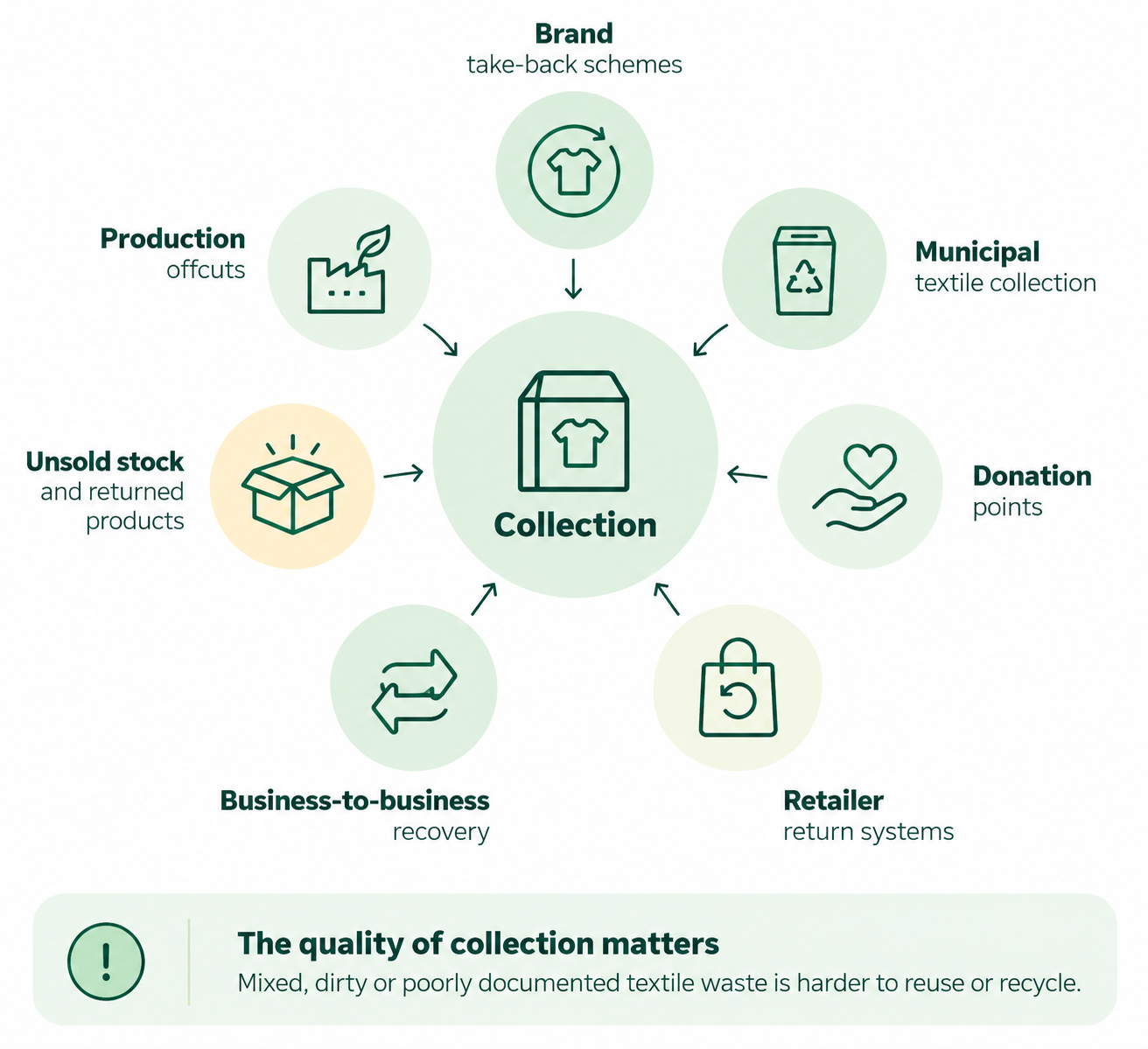
Figure 6.2.1 Textile collection can take place through different channels, including take-back schemes, municipal systems, retailers, donation points and production waste streams. Credit: FashionKIC, Textile Collection Systems Diagram, 2026.