Chapter 4 — full chapter
4.6.2 Design for cyclability
Design for cyclability ensures textile products and materials can re-enter the value chain after use. While durability extends product life, cyclability guarantees that when a product is no longer usable, its components can be effectively recovered, reused, remanufactured, or recycled. Together, these strategies maximize material value and minimize waste throughout the product’s lifecycle.
Cyclability begins at the design stage. One of the most effective strategies to improve cyclability is mono-material design, where a garment's main components are made from a single fiber type or fibers from the same family. Compared to complex blends, mono-material products are easier to sort, separate, and recycle with existing mechanical, chemical, or fiber-to-fiber technologies. When complete mono-material construction isn't feasible, designers should minimize complexity by selecting compatible fibers and components that are easy to disassemble.
Product architecture impacts cyclability by enabling easier disassembly. Standardized parts, detachable fasteners, and modular design allow garments to be repaired, upgraded, reused, or recovered without damaging the rest. Designers should reduce material complexity, avoid permanent bonds between incompatible layers, and choose sewing threads, interlinings, and accessories that facilitate material recovery.
Digital traceability further supports cyclability. Product labels, QR codes and Digital Product Passports (DPPs) provide essential information on material composition, construction methods and recommended recovery pathways. This enables manufacturers, repair services, remanufacturers and recyclers to identify the most appropriate circular strategy for each product.
Key Design Strategies for Cyclability
- Prioritise mono-material or compatible material combinations.
- Minimise permanent bonding and complex composite structures.
- Reduce unnecessary accessories and decorative elements.
- Use detachable and standardised components.
- Select compatible sewing threads, interlinings and trims.
- Design garments for easy disassembly.
- Clearly identify material composition through Digital Product Passports and product labelling.
- Consider available recycling technologies during product development.
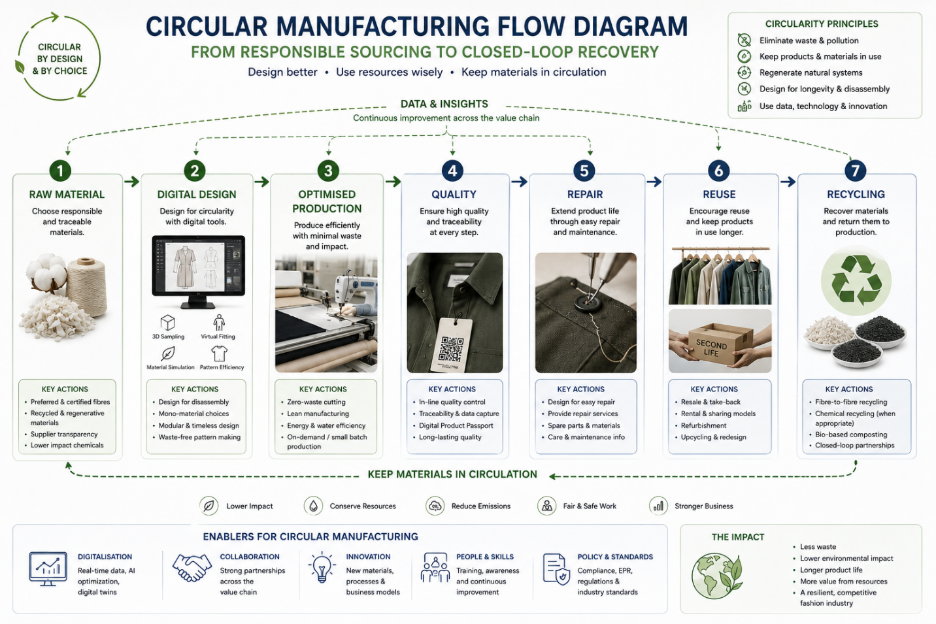
Figure 4.3 Circular Manufaturing Flow Diagram. Source FashionKIC, 2026