Chapter 4 — full chapter
4.3 On-Demand Manufacturing and Mass Customization: Small Collections, Couture, Sartorial
Every garment produced to forecast is a bet placed on a customer who has not yet appeared, and the industry loses that bet often enough that unsold stock is treated as a normal operating cost rather than a failure. The preceding sections removed the barriers that made the bet necessary: without screens, tooling, or sampling rounds, the batch stops being the unit at which production becomes affordable. What remains is a question of sequence, whether the garment is made before the sale or after it.
This section maps the models that inversion makes viable, from web-to-print and made-to-order to micro-factories and mass customization, and the regulatory pressure now pushing the same direction. It also states the costs honestly: longer lead times, higher unit prices, single-item logistics, and the unresolved question of whether personalization reduces consumption or stimulates it.
4.3.1 Sell First, Produce Second: The On-Demand Model
Producing to forecast means overproducing; on-demand means sell first, produce second. Digital technologies make it economically viable: digital printing removes setup costs, additive manufacturing removes tooling, 3D knitting produces garments with minimal cutting waste, and virtual prototyping removes sampling rounds. The resulting spectrum runs from web-to-print platforms and made-to-order collections to local print hubs, micro-factories, small collections, couture, and sartorial production. Mass customization occupies the strategic middle ground, personalised products at near-mass prices, combining body scanning, parametric design, and flexible production; platforms coordinate the chain from customer configuration to delivery, while blockchain and IoT can track items through their lifecycle. Regulation now reinforces the model: the EU's ESPR framework includes a ban on destroying unsold garments, direct pressure toward accurate planning, smaller volumes, and made-to-order. The limits deserve equal attention: longer delivery times, higher unit costs, single-item logistics, and the open question of whether personalization at scale reduces waste or stimulates consumption.
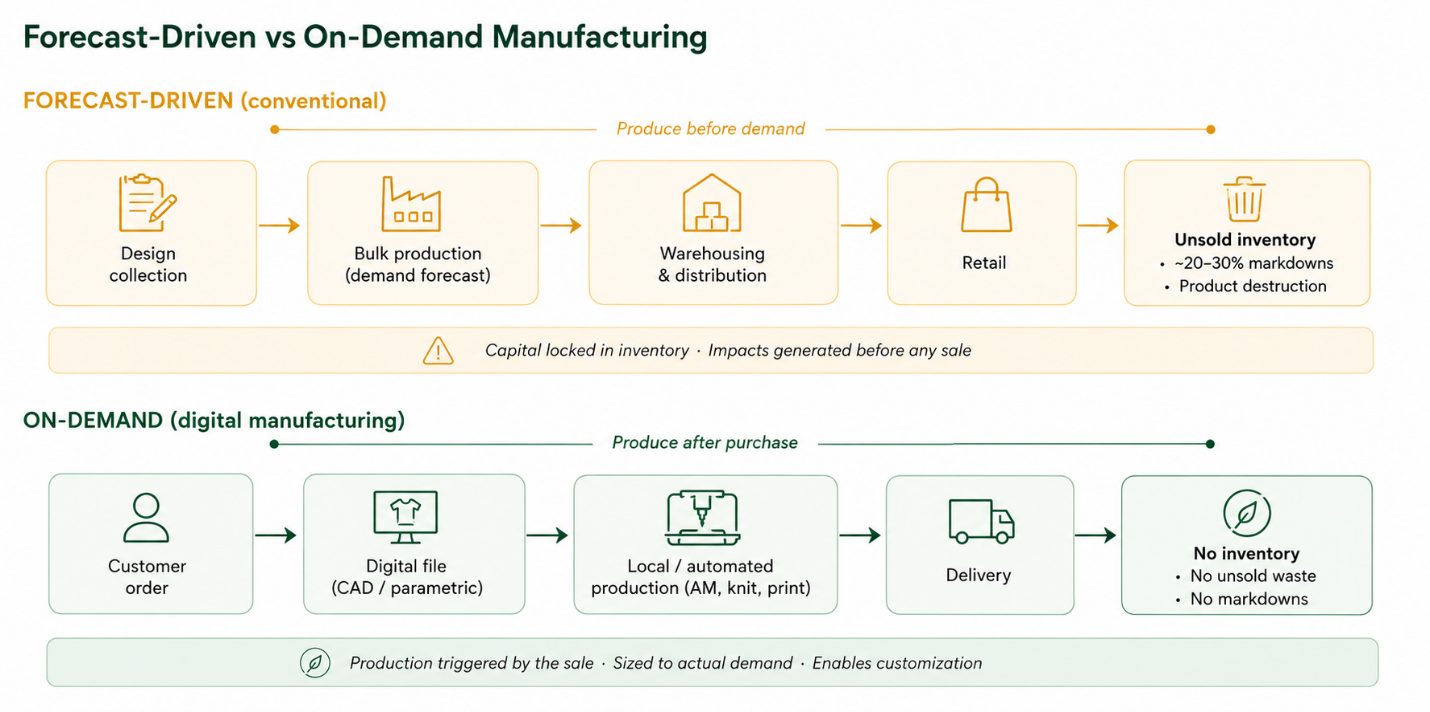
Figure 4.6, Forecast-driven vs on-demand production: producing after the sale eliminates inventory risk and unsold stock. (Diagram: course material)
4.3.2 Case example: Napapijri, Circular Series
The same logic extends beyond footwear: Napapijri applies mono-material engineering to outerwear, and whole-garment 3D knitting achieves comparable mono-material integration in knitwear.
The Circular Series, launched with the Infinity jacket and extended to the Rainforest and Skidoo lines, is engineered as a true mono-material system: the outer fabric is ECONYL® regenerated Nylon 6 by Aquafil, and filling and trims are also Nylon 6, so the entire garment can enter the ECONYL® Regeneration System without disassembly. A take-back program completes the loop: customers can return the jacket after two years, and the material is regenerated into new yarn of virgin-equivalent quality (econyl.aquafil.com; Ellen MacArthur Foundation, circular economy examples).
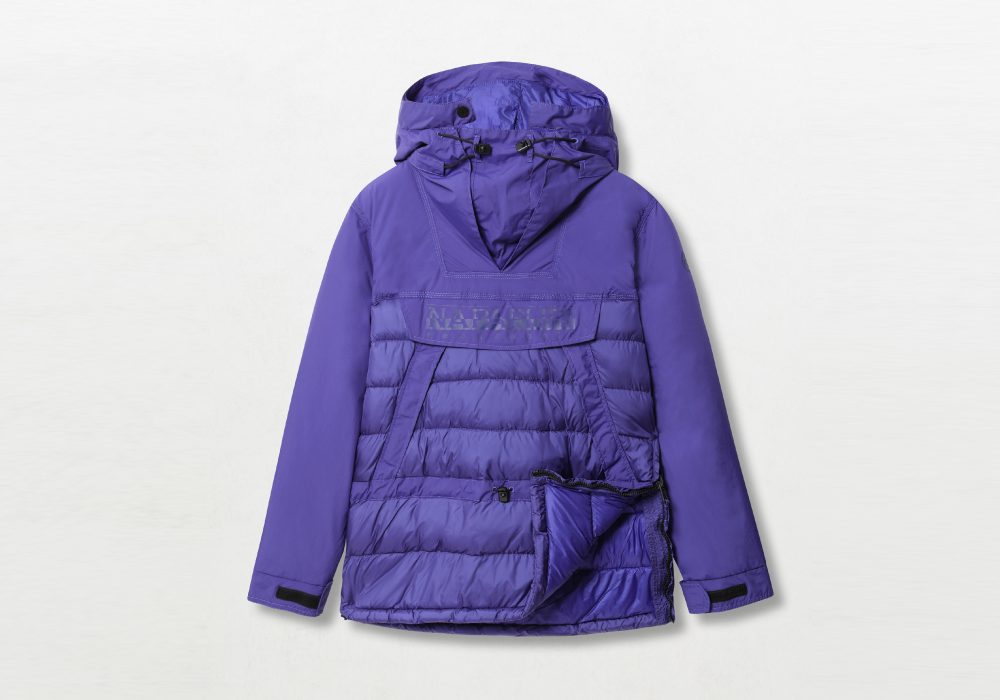
Figure 4.7, Napapijri Circular Series, the Infinity jacket, made from mono-material ECONYL® regenerated nylon and engineered for full recyclability. (Source: napapijri.com)
4.3.3 Case example: Fused Footwear & Zellerfeld, print-to-order footwear
Fused Footwear demonstrates the on-demand model at its most radical: fully 3D-printed, monomaterial shoes (flexible TPU) produced one pair at a time, to order, without adhesives, stitching, or layered assemblies. There is no inventory, no size curve gamble, no unsold stock, a shoe exists only after it is bought. The monomaterial architecture supports clear end-of-life scenarios: the shoe can be treated as a single material system, shredded and reprocessed rather than dismantled.
Beyond the product, the case illustrates the structural shift additive manufacturing enables: a micro-brand operating without industrial plants, tooling investment, or supply chains, relying on digital files and distributed printing. Design authorship, production, and material responsibility are held in the same hands, an emerging template for small-scale, potentially circular fashion economies where the barrier to entry is a design file and a print farm rather than a factory contract.
The same logic is being industrialized by Zellerfeld, the Hamburg-based 3D-printed footwear platform: shoes are printed to order in a single material (ZellerFoam, a proprietary TPU), with no stitching, gluing, or manual assembly; they are washable and, at end of life, can be returned, shredded, and reprinted into new pairs. The open platform hosts designs by established brands, such as Moncler's 3D-printed Trailgrip concept, and independent designers alike, turning footwear production into an upload-and-print service (zellerfeld.com; Designboom, 2023; 3Dnatives, 2023).
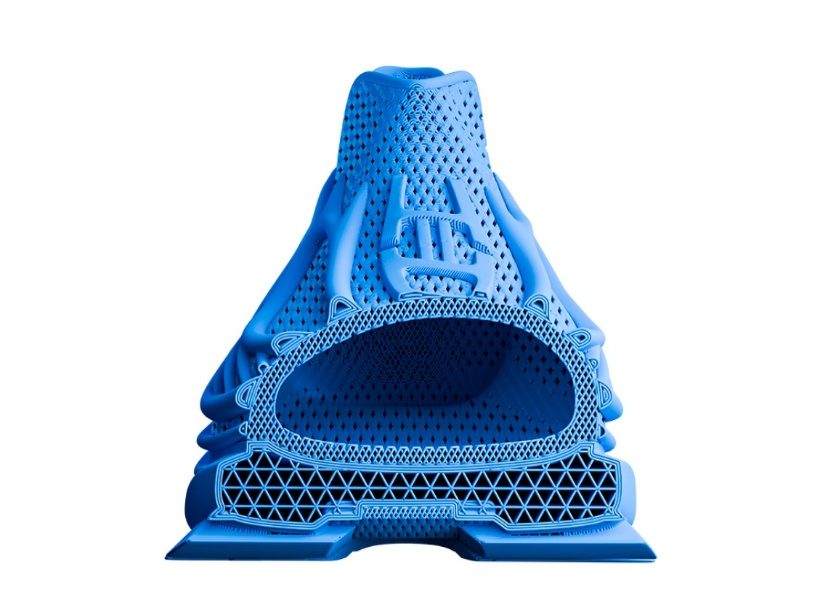
Figure 4.8, Monomaterial 3D-printed footwear: a Zellerfeld cutaway (left) shows how zones of different stiffness are achieved through structure alone within a single material; right, a pair of Fused Footwear. (Source: zellerfeld.com)
← PreviousNext: 4.4 AI × Manufacturing: Process Optimiza... →