Chapter 4 — full chapter
4.2 Digital Textile Printing
Screen printing charges for the decision, not the cloth. Engraving a set of screens is a fixed cost paid before the first meter runs, which sets a minimum order, pushes designers toward conservative repeats, and makes a sample expensive enough to discourage iteration. Inkjet deposition removes the screen, so the hundredth design costs the same to start as the first and a run of ten meters is as viable as a run of ten thousand.
This section covers the machinery architectures and the economics they enable, and then qualifies the environmental claim. The saving is not in the printhead but in the chain around it: pre-treatment, ink chemistry, fixation, and washing determine the footprint, and a digital press used to accelerate conventional overproduction produces waste faster than an analog one.
4.2.1 Ink on Demand: The Economics of Digital Textile Printing
Digital printing transfers a digital image directly onto fabric, most commonly via inkjet. Drop-on-substrate deposition reduces material waste compared with analog setups, and the absence of screen preparation removes the fixed costs that make small runs uneconomical.
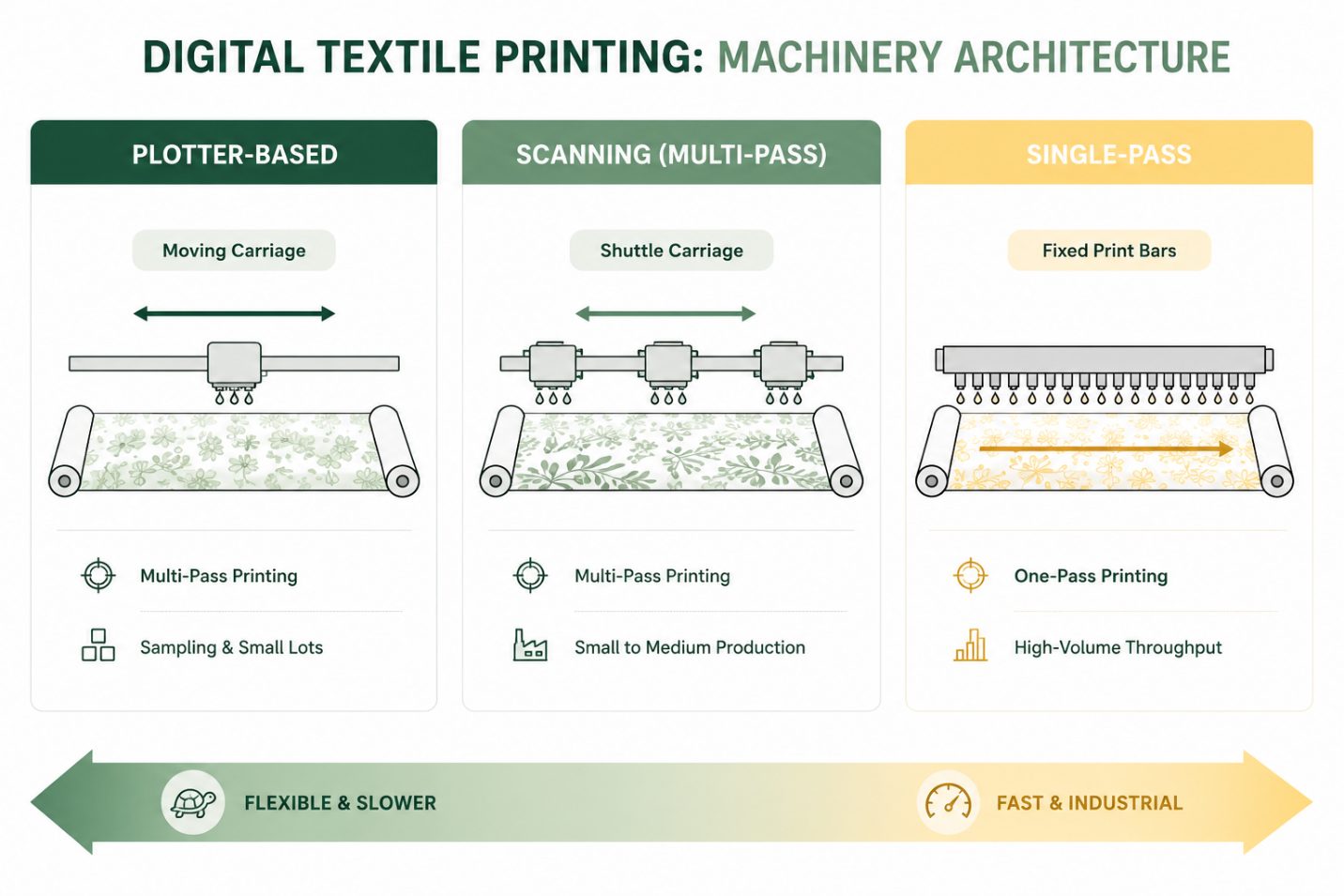
Figure 4.3, Digital textile printing: the three machinery architectures, plotter-based, scanning (multi-pass) and single-pass, from flexible sampling to industrial throughput. (Source: course material)
Compared with screen printing, digital workflows can reduce water and energy demand and nearly eliminate the risk of overproduction in short runs, but the actual footprint depends on fiber-specific pre-treatments, ink chemistry, and post-treatments. Dye-based systems (reactive, acid, disperse) typically require water-intensive fixation and washing; pigment-based inks are the leading 'waterless' route, fixed by dry-curing a binder film, at the expense of dispersion stability, hand feel, and durability. Print quality is governed by ink–substrate interaction, roughness, porosity, fiber chemistry, which is where color management (colorimetry, spectral measurement, QC software) meets production: right-first-time color is both a quality requirement and a waste-prevention strategy.
Beyond efficiency, digital printing is a key enabler of localized, on-demand production, printing small, customized runs close to the point of use instead of shipping bulk goods across continents. Research from the Center for Circular Design at University of the Arts London frames this as a design opportunity as much as a technical one: Rebecca Earley's work combines AI, digital printing and hand-making to develop guidelines for circular, local and urban textile and clothing processes, printing biobased and upcycled materials in short, regionally rooted runs (Earley, 2024; HEREWEAR project). The wider literature on digital textile printing for sustainable localized production makes the same point: the environmental gains are realized only when digital printing is paired with on-demand volumes, low-impact inks and biobased or reused substrates, not when it is used simply to accelerate conventional overproduction (Digital Textile Printing: Opportunities and Challenges for Sustainable Localized Production, 2025).
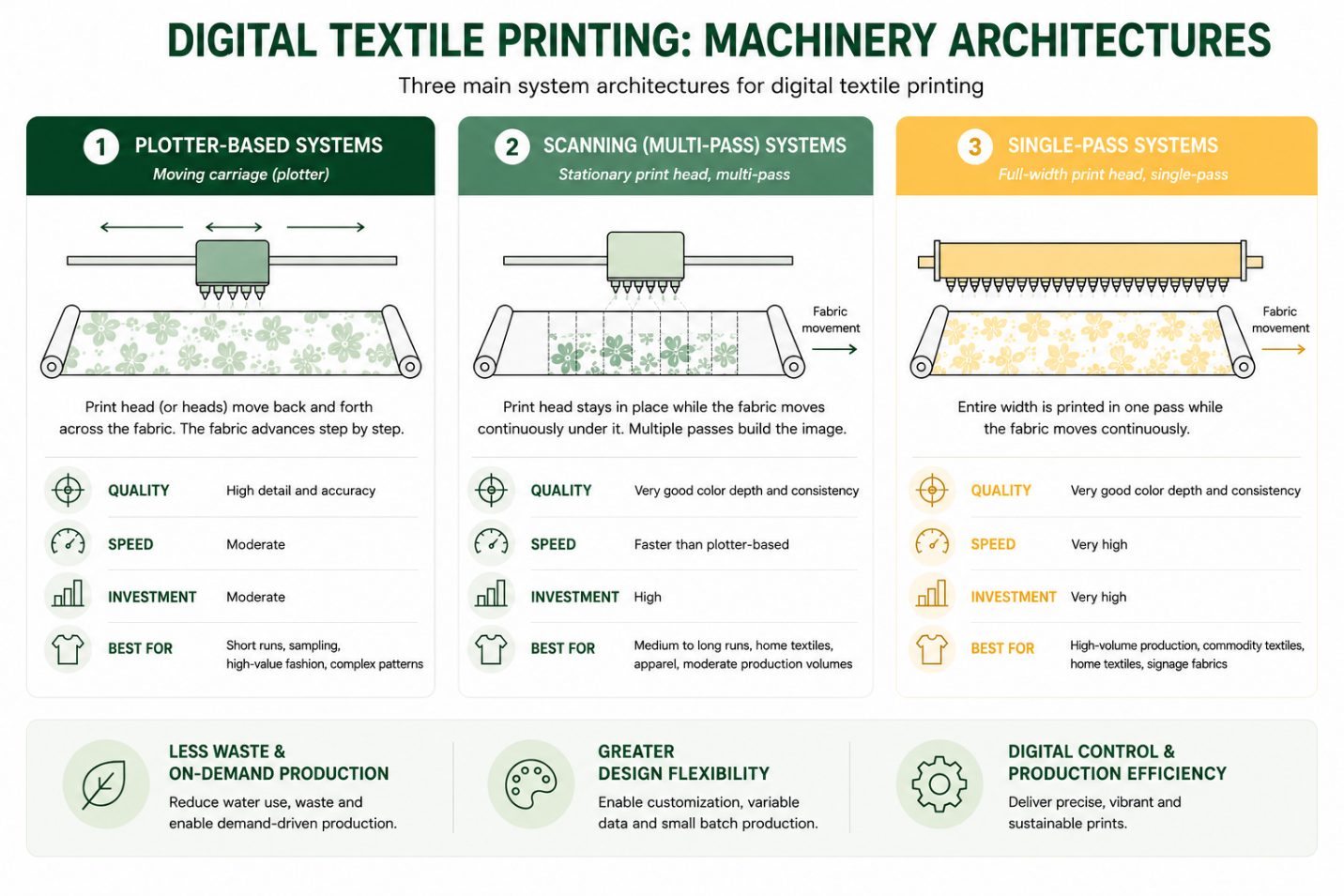
Figure 4.4, Digital textile printing machinery architectures: plotter-based, scanning (multi-pass), and single-pass systems, from flexible sampling to industrial throughput.
4.2.2 Case example: Carriage House Printery (Kornit Digital)
Carriage House Printery, presented by Kornit Digital in a short video case study, built a custom-fabrics business 'from the ground up' on digital textile printing, memorably, with a printer installed 'in a barn'. A family-scale operation offers made-to-order printed fabrics in small batches, serving designers and small brands that rotary screen printing economics would turn away: no screens, no minimum runs, no setup waste.
The case illustrates the entry-barrier collapse this section describes. Where analog printing requires industrial infrastructure and volume commitments, drop-on-demand deposition makes the smallest viable print business a single machine, and locates production close to demand. It is digital printing's sustainability argument in its purest form: print only what is sold, where it is sold.
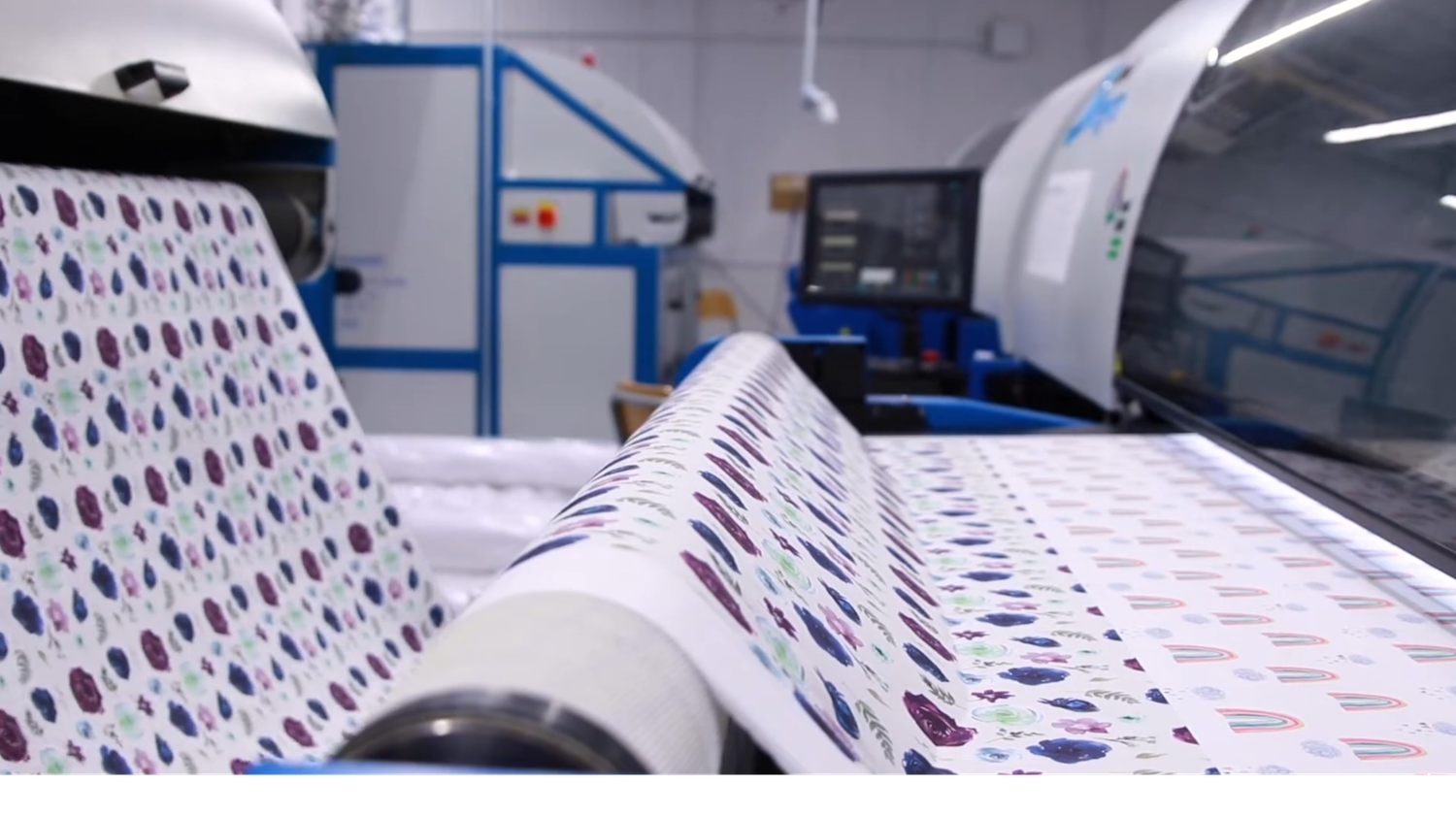
Figure 4.5, Frame from the Kornit × Carriage House Printery video case study. (Source: kornit.com)