Chapter 4 — full chapter
4.1 Digital and Additive Manufacturing: Current Technology Overview and New Manufacturing
Conventional manufacturing spends money before it makes anything. Molds, dies, lasts, and setup are paid for up front, which is why the minimum order quantity exists and why a batch is produced against a forecast rather than against a demand. Additive manufacturing removes that fixed cost: the machine reads a file, so the first part and the thousandth carry the same tooling burden, and geometric complexity is free. This changes the economics of small series, personalization, and on-demand production more than it changes what a factory can physically make.
This section maps the technology families and their fashion applications, then states plainly where the limits are. The binding constraint is not the hardware but the printable feedstock, which is why footwear components are already an industrial reality while wearable garments remain experimental.
4.1.1 Building Layer by Layer: How Additive Manufacturing Works
Additive manufacturing (AM) is the process of combining materials to create objects from 3D CAD models, typically layer by layer, the opposite of subtractive methods. Its defining property is 'free complexity': complex geometries carry no cost penalty, and no tools, molds, or fixtures are required. The workflow connects directly to Chapter 2: CAD model, export (STL, AMF, 3MF), slicing, and machine instructions. ISO/ASTM 52900 classifies AM into seven categories; the most relevant for fashion are material extrusion (FDM/FFF, PLA, ABS, flexible TPU), vat photopolymerization (SLA/DLP), and powder bed fusion (SLS/MJF). Applications span personalized orthopedic insoles, mass-produced midsoles, limited series, experimental luxury pieces, 3D-printed uppers, and rapid prototyping and tooling.
Advantages: complex geometries, tool-less production, faster development, cost-effective personalization, minimal production waste, and on-demand output without inventory.
Limitations: high machine and material costs, slow build speeds, anisotropic mechanical properties, surface roughness, and post-processing needs.
AM is a complementary technology whose sweet spot lies in complexity, customization, and small volumes. The decisive constraint is materials: additive manufacturing in fashion is advancing unevenly not because the machines are lacking but because the printable feedstock is: progress is gated by materials science rather than by hardware. This is why footwear is already a real application while wearable garments are not yet. Shoes and their components, midsoles, insoles, and increasingly whole uppers, tolerate, and often benefit from, the properties that today's printable polymers (TPU and other elastomers, photopolymer resins) actually deliver: controlled stiffness, energy return, durability, and lattice structures that tune cushioning zone by zone. Soft apparel asks the opposite of a material, drape, stretch, breathability, launderability, and next-to-skin comfort, and the polymers that print well remain too rigid, too dense, non-breathable, and poor at recovering their shape, so 3D-printed "garments" stay largely in the couture, runway, and experimental domain rather than in everyday clothing. Closing that gap depends on new materials: softer, fiber-forming printable polymers; multi-material and graded-property printing that combines rigid and flexible zones in one part; bio-based and recyclable feedstocks; and hybrid routes that pair additive processes with whole-garment 3D knitting. For a sustainable design engineer, the lesson is twofold, match the technology to where it is genuinely ready (hard, structured, customized components), and treat the material itself, ideally monomaterial and recyclable, as the real design variable that will decide when additive manufacturing finally reaches the body.
4.1.2 Case example: Danit Peleg, 3D-printed fashion from home printers
In 2015, the Israeli designer Danit Peleg produced the first fashion collection 3D-printed entirely on desktop home printers, building lace-like textile structures from flexible FDM filament; the follow-up 'Create Your Own' bomber jacket (2016) let customers customize and print a garment on demand. The case demonstrates the promise this section describes, distributed, on-demand, waste-free garment production from a digital file, together with its current limits: hand feels, print times, and durability still confine fully printed garments to experimental and couture contexts (danitpeleg.com).
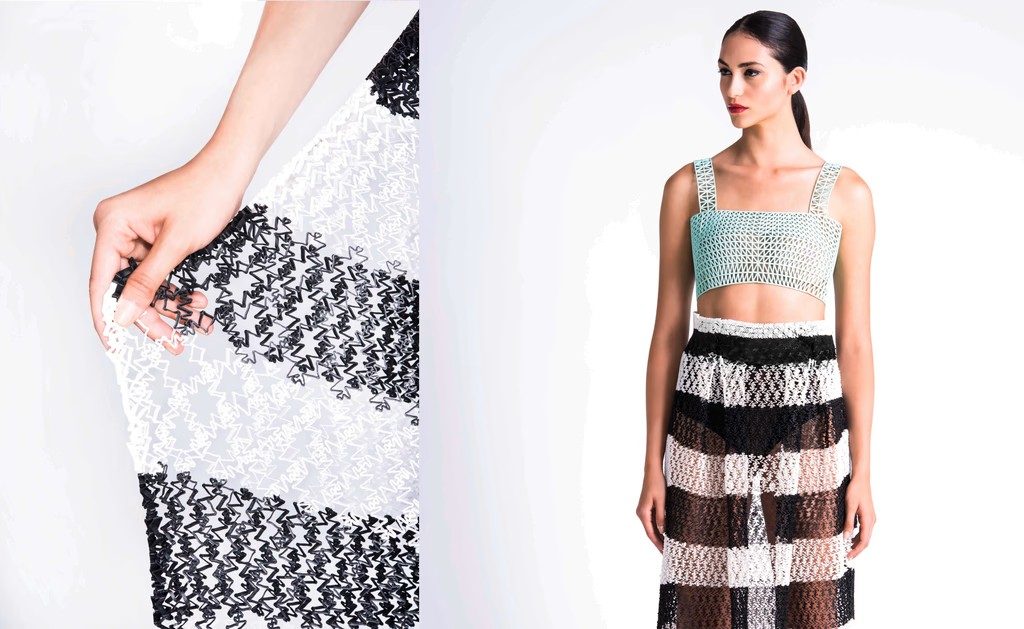
Figure 4.1, Danit Peleg's collection, the world's first fashion collection 3D-printed entirely on home desktop printers (2015). (Source: danitpeleg.com)
4.1.3 Case example: Adidas × Carbon, Futurecraft 4D
The Adidas–Carbon collaboration turned additive manufacturing from a prototyping tool into a mass-production tool. Using Carbon's Digital Light Synthesis process (a fast vat-photopolymerization technology), Adidas developed a workflow to print hundreds of thousands of Futurecraft 4D midsoles cost-effectively, single-piece lattice structures whose density and geometry are tuned zone by zone for cushioning, stability, and energy return, doing with one material and one process what conventionally requires multiple foams and assembly steps.
The strategy is selective adoption: 3D printing is applied to the functionally critical component, not the whole shoe, while Futurecraft STRUNG extends the data-driven logic to uppers through robotic fiber placement that puts each thread where performance data requires it. For the course's argument, the case demonstrates both faces of digital manufacturing: radical performance differentiation through geometry, and a realistic industrial path, brands adopt AM where it adds most value, reducing overproduction and inventory without abandoning conventional assembly.
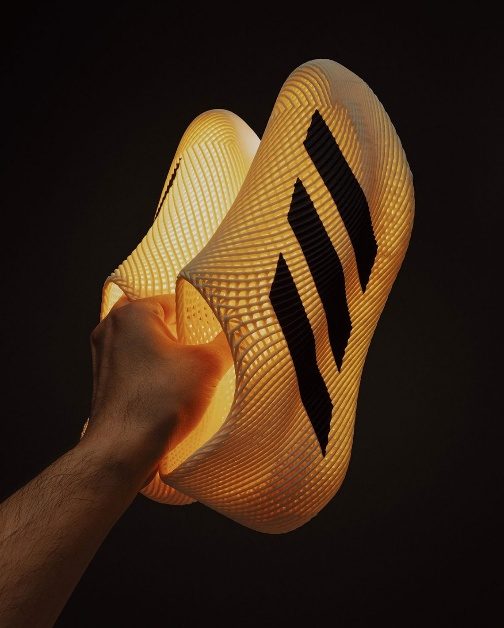
Figure 4.2, Lattice midsole produced by digital light synthesis (Adidas Futurecraft 4D line). (Press image © adidas[7]-www.adidas.com )adidas[7]
Tools: Style3D
Simulation engine for deformable materials behind an end-to-end platform (Studio, Fabric, Atelier, Simulator, AI) connecting digital design to production; positioned for brands and manufacturers building digital product-creation workflows that reduce waste and speed decisions. Source: https://www.style3d.com.