
1.5 Assignment
1.5 Assignment
Choose the track for your profile, then complete the version that matches it. This assignment is worth 5 points; submit your deliverable here (text and/or file upload).
Reframing a Fashion Product Through Circular Design
Learners apply circular design principles to an existing fashion or textile product by identifying linear design barriers and reframing the original design brief to support longer use, value retention and future circulation.
Version A — VET / EQF 4
Activity: Guided Circular Product Check Duration: 45–60 minutes Format: Individual or pair work Output: Completed product checklist + short reflection
Instructions
Choose one simple fashion or textile product, such as a T-shirt, hoodie, pair of jeans, jacket or bag. Examine the product and complete the following checklist:
- What is the product made from?
- Does it contain mixed fibres?
- Does it include trims or components that would be difficult to remove?
- Do the seams and construction appear durable?
- Does the product look easy to repair?
- Does it provide clear material and care information?
- Could it realistically be reused, resold, repaired or recycled?
- What one design change would make the product more circular?
Reflection
In 100–150 words, explain the main circularity barrier you identified and how your proposed design change could help the product remain in use or retain value for longer.
Assessment Criteria
- Identification of basic material and construction features;
- Recognition of at least one circularity barrier;
- Relevance and feasibility of the proposed improvement;
- Clear connection between the design change and longer product or material use.
Version B — HEI / EQF 5
Activity: Circular Lifecycle Map and Redesign Brief Duration: 90–120 minutes Format: Individual or studio work Output: Lifecycle map + before-and-after design brief
Instructions
Select one fashion or textile product and map its current lifecycle across the following stages:
Raw materials → Fibre production → Yarn → Fabric → Finishing → Product assembly → Distribution → Use and care → Repair, reuse, resale or rental → Collection and end-of-use pathway
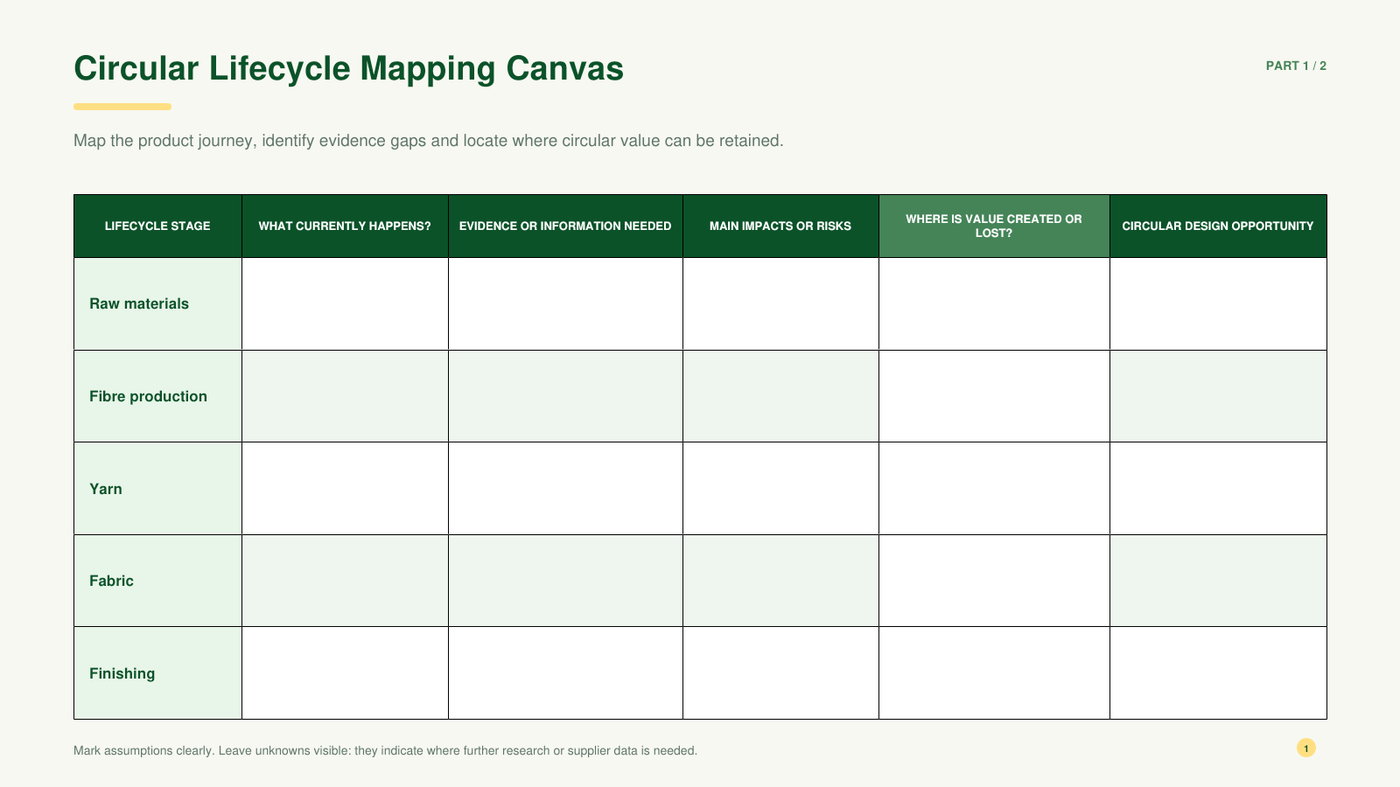
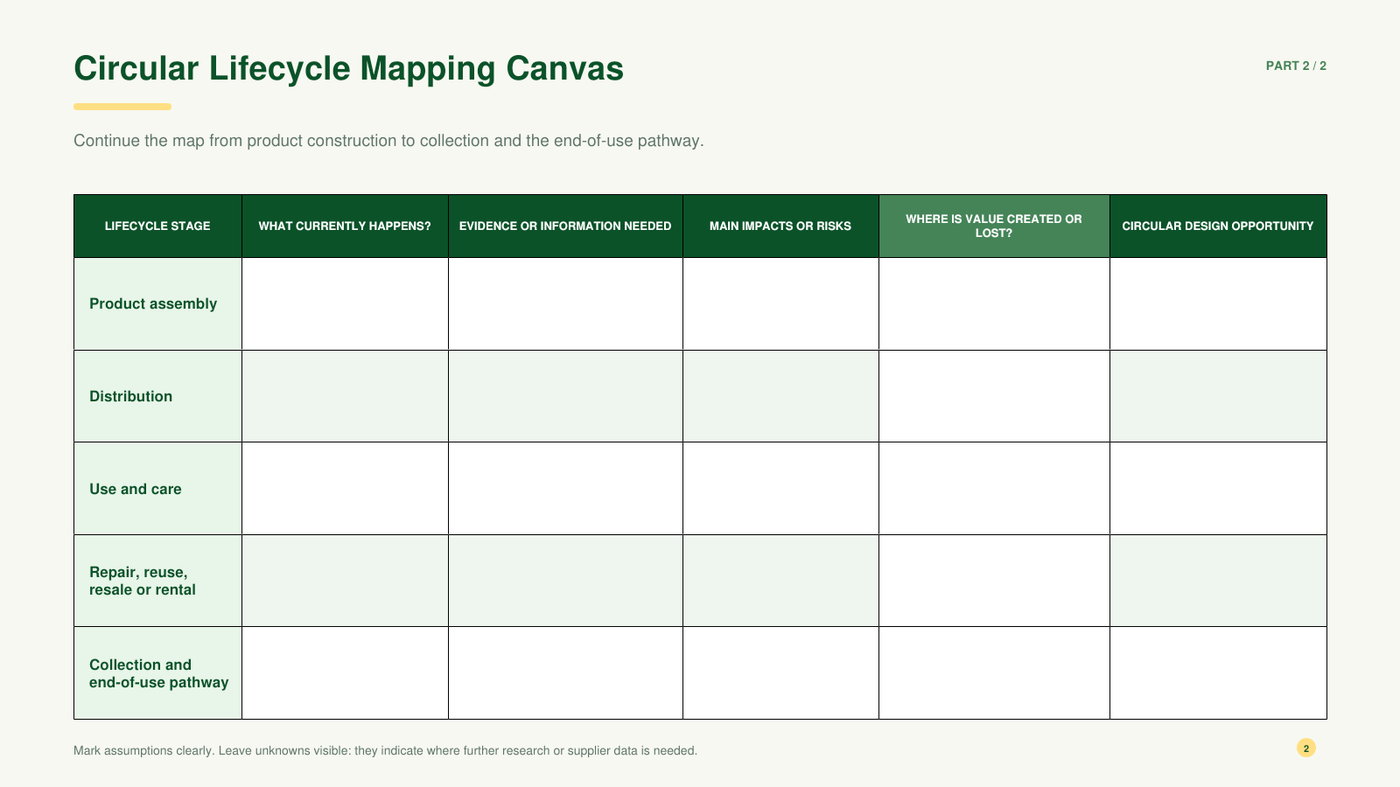
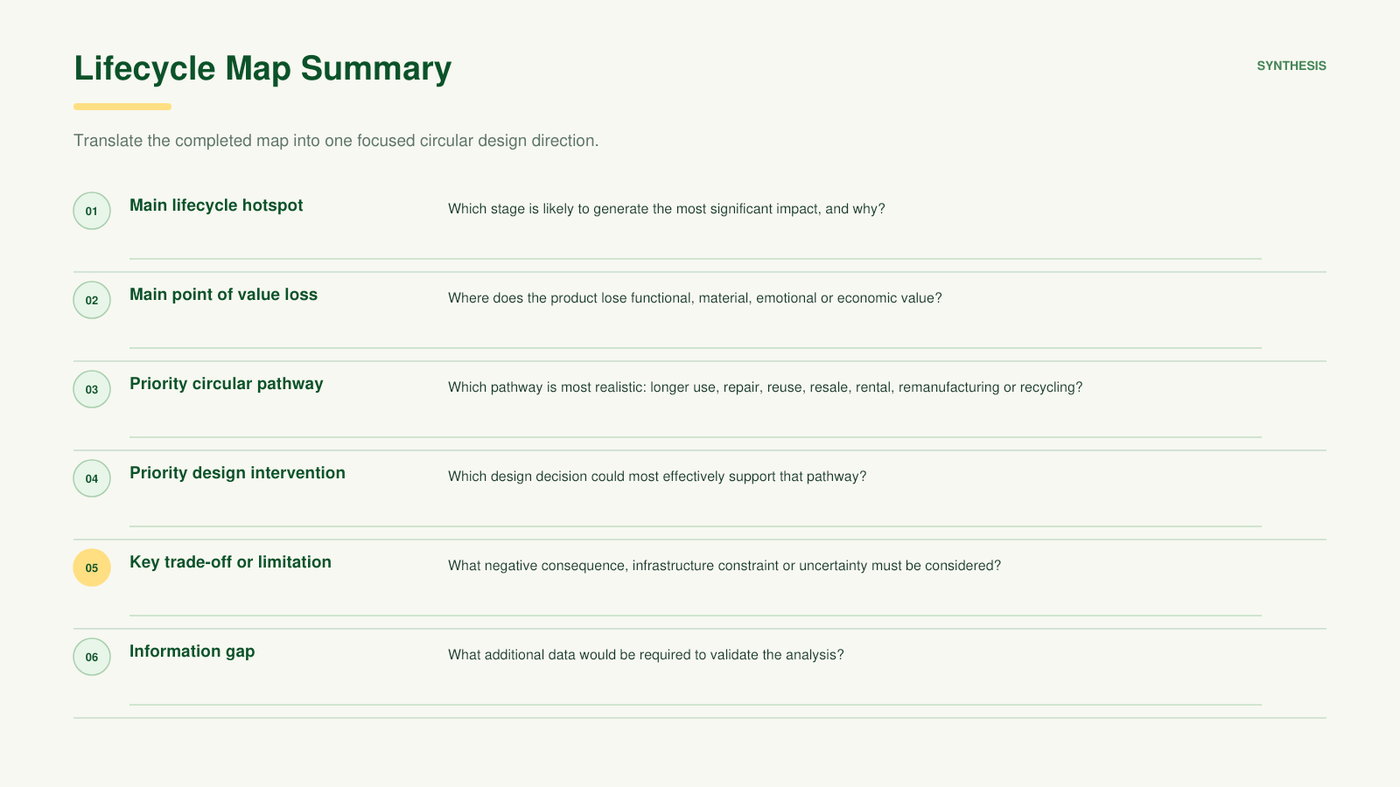
Identify:
- Where the main environmental impacts are likely to occur;
- Where product or material value is created;
- Where value is lost;
- Which design decisions limit longer use or future circulation;
- Which circular pathways are currently realistic for the product.
Then rewrite the original design brief using circular design principles. The redesigned brief should contain at least five criteria selected from the following:
- Material compatibility;
- Durability;
- Repairability;
- Disassembly;
- Emotional longevity;
- Care and product information;
- Resale or rental suitability;
- Take-back pathway;
- Remanufacturing potential;
- Recycling pathways.
Assessment Criteria
- Completeness and logic of the lifecycle map;
- Ability to connect design decisions with lifecycle impacts;
- Identification of realistic value-retention opportunities;
- Relevance and coherence of the redesigned criteria;
- Consideration of trade-offs and practical limitations.
Version C — Professionals / SMEs
Activity: Circular Value Brief for a Real Product Duration: 2–3 hours Format: Individual, team or company-based workshop Output: Circular value brief + prioritised action plan
Instructions
Select a real product, product line, or business context from your organisation. Analise whether the current offer is designed primarily for first sale or whether it already supports longer ownership, repair, resale, rental, take-back, remanufacturing or recycling.
Choose one priority circular scenario:
- Designed for longer ownership;
- Designed for repair;
- Designed for resale;
- Designed for rental;
- Designed for take-back;
- Designed for remanufacturing;
- Designed for recycling;
- Designed around regenerative sourcing and impact.
Develop a circular value brief containing:
- The current product and business context;
- The main linear barriers;
- The selected circular opportunity;
- The required product and design changes;
- The implications for operations and the business model;
- The stakeholders, suppliers or partners required;
- The principal risks, trade-offs or implementation constraints;
- One short-term action and one longer-term action;
- One indicator that could be used to evaluate progress.
Assessment Criteria
- Relevance of the selected circular scenario;
- Ability to connect product design with business and operational requirements;
- Feasibility of the proposed actions;
- Recognition of stakeholders, risks and trade-offs;
- Potential to retain product, material, or business value.
- View
- Make a submission